
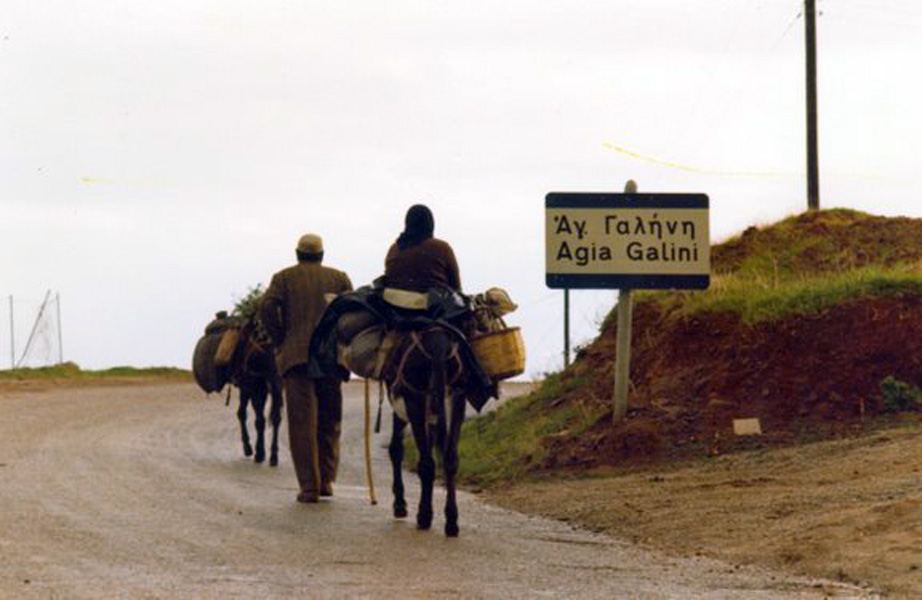
Ancient Soulia
The village of Agia Galini stands on the site of the ancient Minoan city of Soulia, one of the hundred cities of Crete mentioned by Homer.
Soulia was once a place of worship, home to a temple dedicated to the goddess Artemis. The city flourished until the 7th century AD, when it was destroyed by pirates.
Archaeological findings — including tombs, marble fragments, and building remains — still bear witness to this ancient settlement. Two granite columns from the temple now adorn the village church, linking Agia Galini’s present with its distant past.

From Port to Village
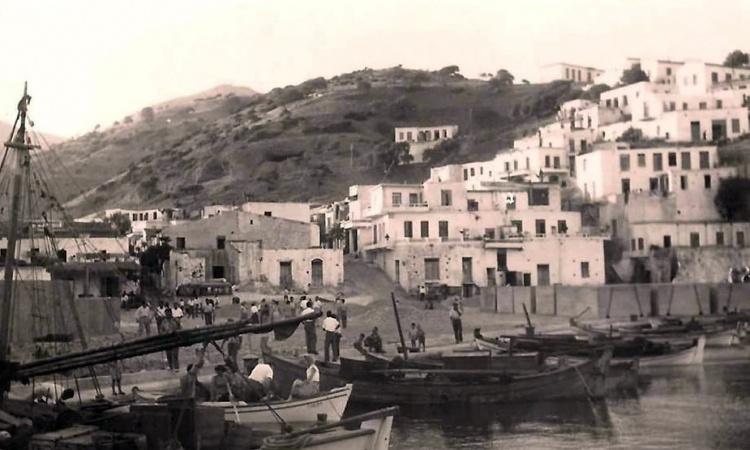
Thanks to its naturally sheltered bay, Agia Galini has always been a safe anchorage for ships. During the Cretan revolutions of 1821 and 1866, the harbor was used to unload munitions.
Later, the port became vital for trading olive oil produced in the nearby fertile regions of Ampadia and Melampes.
The modern village began to take shape in 1884, when merchants built warehouses, oil storage facilities, and homes near the port. By 1890, a small but permanent community of around 20 people lived here, marking the beginning of Agia Galini as we know it today.
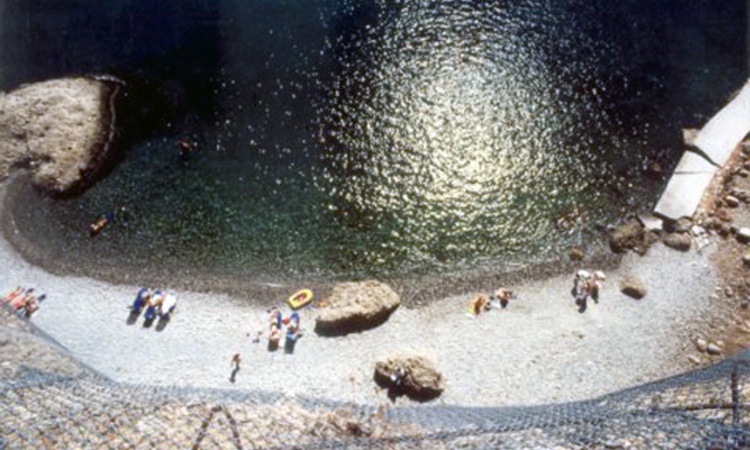
On the western edge of Messara Bay, visitors can still see the remains of a World War II German fortification, with staircases and storage rooms carved into the rock — a silent reminder of more turbulent times.
The Origin of the Name
According to legend, Empress Eudocia of Byzantium gave the village its name. While sailing to Jerusalem, her ship was caught in a violent storm near ancient Soulia. She prayed to the Virgin Mary for protection, vowing to build a church if they found shelter. The ship safely reached the calm bay, and true to her word, the Empress built a small temple dedicated to the Virgin Mary of Serenity (Panagia Galini).
Over time, the name evolved into Agia Galini, meaning “Saint Serenity” — a name that perfectly captures the peaceful spirit of the place.



Daedalus & Icarus
Agia Galini is also connected to one of the most famous Greek myths — the story of Daedalus and Icarus. According to legend, the master craftsman Daedalus hid in a nearby cave to escape King Minos of Crete. There, he built wings of wax and feathers so he and his son Icarus could fly to freedom.
From a hill above the harbor, they took flight — but Icarus, flying too close to the sun, saw his wings melt and fell into the sea near the island that now bears his name, Ikaria. Daedalus continued his journey to Italy, mourning his son.
Today, at the edge of Agia Galini’s harbor, you can see the statues of Daedalus and Icarus, gazing toward the horizon. An open-air amphitheater nearby is dedicated to this timeless legend — a beautiful tribute to Crete’s mythological heritage.